Did I tell you that I absolutely love decorating the Christmas tree? Well, this is the result of my efforts!! Do you like it?? :-)
giovedì 27 dicembre 2007
My Christmas tree
Did I tell you that I absolutely love decorating the Christmas tree? Well, this is the result of my efforts!! Do you like it?? :-)

That's what Christmas is all about, Charlie Brown!
Video by devilishduck
I know that I've already talked about Charlie Brown and my passion for the Peanuts' band, but I just couldn't help adding this video too: its simplicity really moved me! :'-) Charlie Borwn is trying to organize a show to celebrate Christmas, but it seems that nobody knows what this holiday is all about: his friends are only interested in gifts, parties and food and cannot feel the real meaning of this holy day. A little, ailing tree will help them all to remember that Christmas is much more than that: it is an occasion to realize what life has given us and to let our loved ones feel our affection for them.
Mr Bean's Christmas party
Video by asmonaco6
Yesterday afternoon I was lying on my couch and watching TV - trying to recover from the Christmas nosh-up - when I came across one of the exhilarant episodes of "Mr Bean's saga"! If you like his speechless humour, have a look at this video! A suggestion: do not imitate the way he prepares the turkey...:-)
sabato 8 dicembre 2007
Get ready for Christmas!!!!
 image from Virgilio images
Have you ever watched "Nightmare before Christmas"? Well, this is the right moment!!! You won't regret it, it's amazing!!!
venerdì 7 dicembre 2007
Congratulations!!!!!!
 This is my friend Chiara, who took her degree in Economia internazionale last week! Because she is often ill (poor her!), we realized her fancy dress by sticking medicine boxes to an overall that Alberto's mom found in the hospital where she works.
 But have a look at this second photo down here: she looked awesome at the party she organized to celebrate this moment!! Congratulations Chiara, I love you so much!

mercoledì 5 dicembre 2007
My PLE
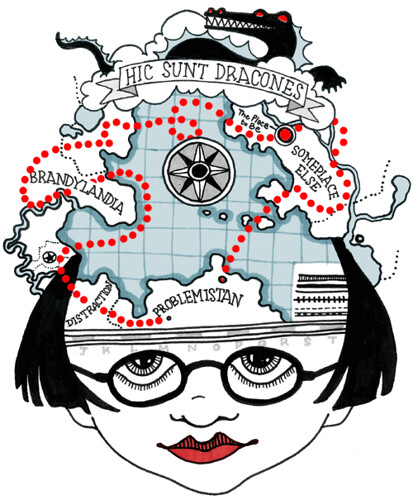
Now that we’ve become little wizards in informatics, it’s time to enlarge our vocabulary as well: the unknown word of this week is…PLE!!! What on earth is a PLE? Do you eat it??? I read carefully e-tivity 9 and I cleared up the mystery: PLE is an acronym that stands for Personal Language Environment, that is "a combination of the formal and informal tools and processes we use to gather information, reflect on it and do something with it, which is essentially what we mean when we talk about learning"(Martin, 2007). Sarah explained that our own blogs are examples of PLEs, but she immediately added that a PLE is not something material and tangible: it’s a concept, an idea. It’s a “space” that each one develops according to his personal cognitive style, in which he finds everything he needs to develop and practise his language skills. Whether it is a blog, a website, a diary or a chat, it doesn’t matter: actually, it can be all four of them or none of them and it doesn’t necessarily have to be an object. Imagine it as the way you exploit the world to keep your language competences up-to-date, the way you use the environment as your private “language gym”. Have you ever thought about your learning process in these terms? Honestly, I tend to spend more time on doing things than on reflecting on how and why I do them; by the way, this activity could be an opportunity to sum up how we have organized the study of foreign languages so far, given that the end of our journey is not too far away. The years spent on school desks have almost gone: the training is over and we have to be aware of the level we have achieved to find our way in the world of job. A mind map can help us to draw a complete picture of our current situation and to understand how to strengthen our weak points in the next future.
Clicking here you can see the mind map of my PLE: making it was not so easy, I had to recall the learning strategies I’ve adopted so far and I’m pretty sure I forgot a lot of interesting hints. There are four main areas: “university”, “hobbies”, “personal experiences” and “certifications”.
I preferred to divide the first one into “traditional learning” and “technological tools”: it is a distinction that has become evident in relatively recent times, more or less since the last year of high school. Little by little, the means of communication and the new technologies have acquired a more and more important role in the teaching of languages, offering the learners the chance to keep on practising on their own by doing something they like (listening to CDs, watching videos, chatting, surfing the Web…). However, Web 2.0 & co. haven’t completely substituted books, grammar rules and exercises: they are still essential to lay the foundations of a solid knowledge that then can be put to the test on the Net.
Technology can be used in the spare time as well: for example, I’ve learnt lately that a feed aggregator like Bloglines can provide me the latest news from my favourite websites and online magazines. Everything can be useful to make you more and more confident in the use of languages: have you ever read the labels written in different languages on perfumes and shampoos??? Well, I always do! It’s quite odd, I know, but in this way I learnt that the English word for ”latte detergente” was cleansing milk :-) As my knowledge increased, I discovered that many things I was used to do in Italian could be done in a foreign language as well: by watching films and doing crosswords I can keep on learning without even realizing it.
Personal experiences are divided from hobbies: they are the occasions in which I could exploit my knowledge directly “on the field” (travels and little jobs).
The competences acquired in the ways mentioned above were evaluated: in the last year of high school I got the First Certificate of English, then I took private lessons of French and Arabic and I attended a summer course of Spanish; I had to take an exam at the end of each course to get a certification assessing my level of language knowledge. These experiences helped me to get used to the frightening moment of the test and to focus on the aspects of my preparation that needed to be improved. Over the “Laurea triennale”, I also developed my Language Portfolio, which is a sort of summary of the path I followed in the study of languages and contains some pieces of writing as an example of the level that I’ve achieved.
Then I added two more links: yesterday and tomorrow. Sarah said that our PLE is something that we create and change constantly, according to our age, the environment in which we live and our needs. For this reason, I decided to reflect upon the way I learnt languages in the past and the strategies I will use in the future. As you can see, when I was younger the learning process was based mainly on entertaining activities, a good technique to make children learn something new and unknown in a pleasant way. Next to the word “tomorrow” I put the icon of a bomb because I still can’t foreseen what the future has in store for me: I really hope I will have the chance to exploit what I’ve learnt so far and to speak the languages I’ve studied (and maybe some more!) everyday to keep my knowledge “fit”! By the way, I feel confident and I’m sure I will continue to improve my language skills whatever job I will happen to do. Why? The answer is the element that appears in all the areas of my mind map: CURIOSITY. I’ve always devoted myself to the study of languages simply for curiosity’s sake, it’s not a burden for me because I know that what I learn enables me to express what I think better and better. This is my passion and I know it will last forever.
Technology can be used in the spare time as well: for example, I’ve learnt lately that a feed aggregator like Bloglines can provide me the latest news from my favourite websites and online magazines. Everything can be useful to make you more and more confident in the use of languages: have you ever read the labels written in different languages on perfumes and shampoos??? Well, I always do! It’s quite odd, I know, but in this way I learnt that the English word for ”latte detergente” was cleansing milk :-) As my knowledge increased, I discovered that many things I was used to do in Italian could be done in a foreign language as well: by watching films and doing crosswords I can keep on learning without even realizing it.
Personal experiences are divided from hobbies: they are the occasions in which I could exploit my knowledge directly “on the field” (travels and little jobs).
The competences acquired in the ways mentioned above were evaluated: in the last year of high school I got the First Certificate of English, then I took private lessons of French and Arabic and I attended a summer course of Spanish; I had to take an exam at the end of each course to get a certification assessing my level of language knowledge. These experiences helped me to get used to the frightening moment of the test and to focus on the aspects of my preparation that needed to be improved. Over the “Laurea triennale”, I also developed my Language Portfolio, which is a sort of summary of the path I followed in the study of languages and contains some pieces of writing as an example of the level that I’ve achieved.
Then I added two more links: yesterday and tomorrow. Sarah said that our PLE is something that we create and change constantly, according to our age, the environment in which we live and our needs. For this reason, I decided to reflect upon the way I learnt languages in the past and the strategies I will use in the future. As you can see, when I was younger the learning process was based mainly on entertaining activities, a good technique to make children learn something new and unknown in a pleasant way. Next to the word “tomorrow” I put the icon of a bomb because I still can’t foreseen what the future has in store for me: I really hope I will have the chance to exploit what I’ve learnt so far and to speak the languages I’ve studied (and maybe some more!) everyday to keep my knowledge “fit”! By the way, I feel confident and I’m sure I will continue to improve my language skills whatever job I will happen to do. Why? The answer is the element that appears in all the areas of my mind map: CURIOSITY. I’ve always devoted myself to the study of languages simply for curiosity’s sake, it’s not a burden for me because I know that what I learn enables me to express what I think better and better. This is my passion and I know it will last forever.
mercoledì 28 novembre 2007
Valuable or not valuable? That is the question!

photo by Google images
The evaluation of sources: it’s a “boiling issue” all of us have had to cope with several times in his/her scholastic career. Sarah definitely hit the bull’s eye: the reliability and the trustworthiness of our master thesis will greatly depend on the consistency of the material we will collect and on which we will base our line of reasoning. Therefore, it’s vitally important being prepared to judge carefully what we happen to read, not to run the risk of including poor and incoherent information.
I read the tips given in the three websites Sarah suggested and I found them extremely clear and useful: they were undoubtedly written by people who experienced themselves the difficult “struggle” against rubbish news! I use such a term because for me the search for reliable sources can be compared to a real fight to the death, especially if you decide to surf the Net: to type the keywords and to start the search engine is to open Pandora’s box! You are literally overwhelmed by thousands, even millions of answers to your question and you necessarily have to find a way to identify what is really worth reading.
While looking for more information about this topic, I came across another remarkable website (Module 3 Evaluating) containing smart guidelines not to get lost in the “tsunami” of suggestions and links the Internet offers you. By and large, it says the same things as the sites I previously mentioned, but it also highlights the importance of checking the last part of the url (“top level domain name”) of the pages you would like to visit. Sarah, too, pointed out this criterion of selection in class and it is the first strategy I adopt when I judge online sources: the information you can get from a website run by government agencies (.gov), non-profit organizations (.org) or education institutions (.edu or .ac.uk.) is certainly more valuable than the news you can spot in essay banks, blogs, chat rooms and personal webpages. In this cases, as the article from the University of Essex clearly explains, “you know nothing about who the authors are, or what authority they have for expressing a view on the subject”. If you want your work to be serious and taken into consideration by the people who will read it, you can’t refer to what an unknown, sometimes even anonymous, author has written on his page: the website could contain just his opinion, groundless conjectures he developed on his own. Then, your teacher could think that adding to the bibliography of your thesis the url of chat rooms and blogs is not very professional!
The main problem is that looking for valid and useful news is always tiring and time-demanding. In the past we used to turn over the pages of piles of books to carry out our works of research: it took a lot of time, but at least we knew (or we hoped!) that the authors were experts in the field; many of them had written other articles, essays, books, so we had the guarantee that what we read were thoughtful reflections and theories. Now books have become old-fashioned, everything you are looking for is on the Web: it is true, but we also learnt that the right way to follow is often hidden among many dead paths. Finding it demands time and people are not willing to waste hours and hours to make sure of the validity of the information Google has first displayed on their screen. In the website I mentioned above there is an interesting survey about the way people carry out their research: you can answer yourself the questions and then check the results. The data are stricking, I report them here:
- to start a research paper the 66% of people look for websites;
- the 48% spend less than five minutes to select the source;
- to determine if information is factual the 47% simply assume that what they read is probably true.
This is why bad written and unreliable essays are so common and plagiarism is such a current issue.
In order to screen the list of returns search engines give you, using specialized search engines could be a good idea: I tried myself Mamma (what a nice name!) and it greatly reduces the number of links you can check by providing only the most relevant returns from the other search engines it searches.
Once you have checked if the website and his/her author are really trustworthy, there is one more question you should ask yourself: when was the page last updated? As you can read in the article from Purdue' Online Writing Lab, “some information becomes dated when new research is available, but other older sources of information can be quite sound 50 or 100 years later”. It is important to keep in our mind what kind of information we need to decide if a piece of writing is outdated or not (in respect of this matter, the website I suggested you was last updated in 2003, but you can still answer the survey, so the results are reliable!).
This long process is another clear proof that the Internet can make our life easier, but in order to use it properly we have to resort to our criticism and to accept the fact that we have to spend some of our precious time.
Iscriviti a:
Post (Atom)